
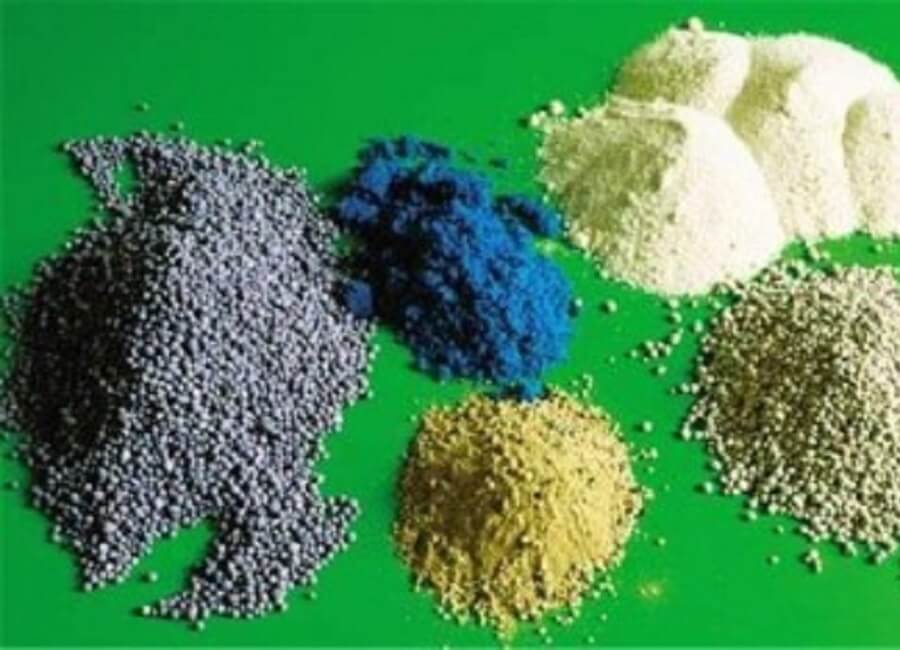
Fertilizers supplement plants with the vital nutrients needed for optimal, healthy growth. You can choose from two categories of fertilizers: organic and inorganic products. Organic fertilizers undergo little processing and include ingredients such as composts and manure, while inorganic fertilizers are synthetic and typically made from petroleum. Before choosing a product, you need to understand the choices available and their functions (homeguides.sfgate.com).
Read more about Inorganic Fertilizer: Advantages and Disadvantages
Read also: Why is Organic Fertilizer better?
Complete and Balanced Inorganic fertilizers
Inorganic fertilizers come in single-nutrient or multi-nutrient formulas. Multinutrient formulas include complete and balanced fertilizers, which contain basic nutrients, such as nitrogen, phosphorus and potassium, as well as secondary and micronutrients such as calcium, magnesium, boron and manganese. The percentage of nitrogen, phosphorus and potassium contained in both complete and balanced fertilizers is indicated by three numbers on the package. For example, a 5-10-5 formula is a complete fertilizer, containing 5 percent nitrogen, 10 percent phosphorus and 5 percent potassium. Balanced fertilizers are those that contain equal nutrient amounts, such as a 10-10-10 formula.
Slow-Release and Specially Formulated
Other types of inorganic fertilizers include slow-release formulas. These formulas contain larger molecules that are coated, helping them to break down slowly in the soil. A typical slow-release fertilizer releases nutrients over a period of 50 days to a year, reducing the chance of burning the plant or root system. Specially formulated inorganic fertilizers are those that are created for a specific type of plant. These special formulas include plant foods for cocoa, azaleas, rhododendron or roses. Specially formulated fertilizers are usually highly acidic and are used only on the plants for which they are indicated.
Read also: Safety Precautions in Agrochemicals handling and usage
Nitrogen Fertilizers
Inorganic nitrogen fertilizers come in many different forms, such as ammonium nitrate, potassium nitrate, calcium nitrate and urea. These fertilizers contain high levels of nitrogen, one of the most vital nutrients for plant growth. However, these inorganic fertilizers tend to increase the pH of the soil upon application, increasing the chances of burn and damage to seedlings. Others pull moisture from the air, making them difficult to apply and store.
Potassium Fertilizers
Inorganic potassium fertilizers include potassium sulphate and potassium nitrate, as well as muriate of potash, also known as potassium chloride. Muriate of potash is the most commonly used potassium fertilizer. In some cases, plants may be sensitive to chloride. If a plant is sensitive to chloride, potassium sulphate, also known as sulphate of potash, is a better choice, as it does not contain chloride. Potassium nitrate is easy to apply, because it does not pull moisture from the air, but it does slightly increase the pH of the soil upon application.
Read also: 6 Basic Soil Problems and Recommended Solutions in Agriculture
Phosphorus Fertilizers
Inorganic phosphorus fertilizers such as rock phosphate stay in the soil years after the first application. Rock phosphate works only in acidic soils, as the nutrients do not break down for plants in neutral or alkaline soils. superphosphate are other forms of phosphorus fertilizer. These do not affect the pH of the soil upon application, while ammonium phosphates come in water-soluble, granular forms.
Reference: homeguides.sfgate.com

Related Posts
January 15, 2018
January 18, 2018
January 15, 2018



1 Comment. Leave new
You mentioned rock fertilizers only working if they are in acidic soils. My wife and I were wanting to start a garden this summer. It would be smart to find out what type of soil we have because it would affect the fertilizer we choose. http://www.tandninc.com/about-us.html