
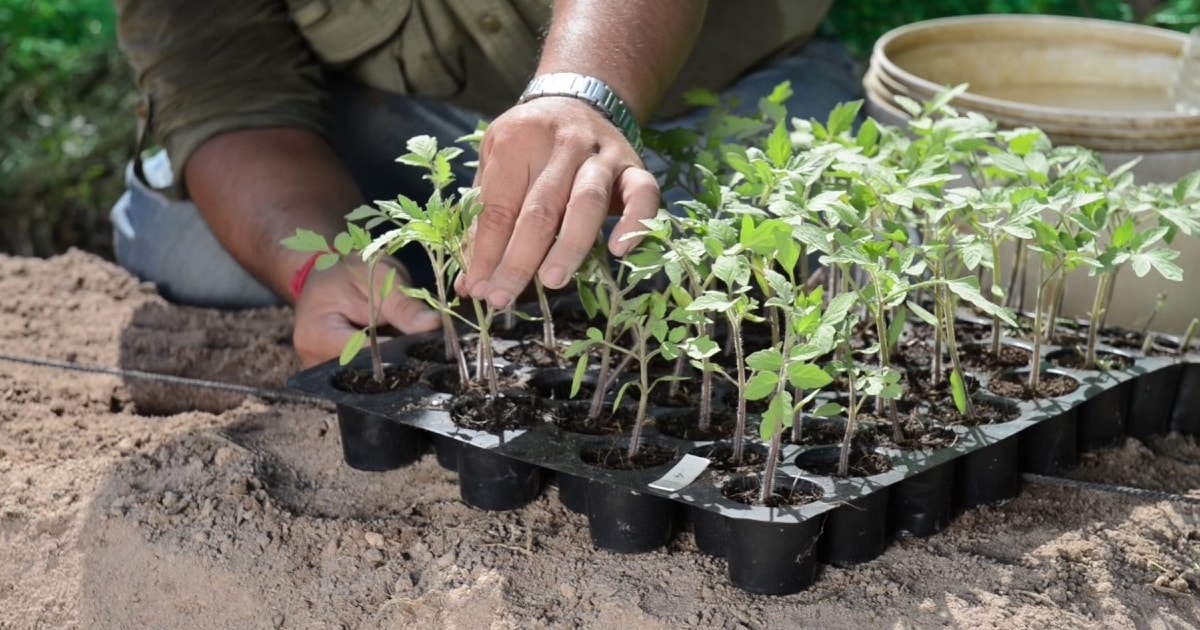
Transplanting vegetable seedlings from the nursery is one very key activity after the seedlings reach maturity. To ensure good plant population, better establishment and optimum yield, you must carry out all the necessary precautions under the steps. Moreover, it is important you observe the steps in establishing your vegetable farms, to save a lot of costs and time.
Read also: Vegetable Seedling Nursery Establishment and Management
Before carrying out transplanting vegetable seedlings to the field, make sure of the following.
- Seedlings are about 4-6 weeks old and about 10-15cm tall. This may differ in other crops like the onion.
- Reduce the amount of water you apply to the nursery one week before transplanting. This is called hardening. It helps the seedlings to overcome the harsh conditions on the field after transplanting.
- Avoid transplanting on hot periods. Transplant during late afternoon or on a cloudy or cool day. The seedling may wilt from hot weather after transplanting.
Now, observing the following steps in transplanting vegetable seedlings will ensure less damage to the seedlings. The seedlings will grow with vigour, you will get high plant population and an increase in yield.
Step 1
The day before transplanting gently water in the seedbeds.This makes water available for the seedlings and also makes the soil moist enough for easy removal of seedling on the day of transplanting. Do not water on the day you transplant.
Step 2
Make sure you have adequately prepared the field and that you have marked all the points for planting before transplanting vegetable seedlings. Also, use the correct planting distance between rows and between the plants.
Read also: Detailed steps on how to Start a Farm
Step 3
Carefully uproot the seedlings from the seedbed. The water you apply (Step 1) the day before transplanting will make sure there is enough moisture in the soil for easy removal of the seedling.
Step 4
Gently place the seedlings the transporting container. You may use a bowl, bucket, basket or any clean container with enough space to hold the seedling. Then, transport them immediately to the planting field.
Step 5
Plant the seedling immediately they arrive at the farm. Make sure they are planted at a similar depth as they were on the seedbed. For tomatoes, it is better to plant at a deeper depth.
Step 6
Now, to plant the seedlings, hold the seedling in one hand and using two fingers of the other hand make a hole 3-5cm deep at a marked position. Besides, make the hole big enough to create enough space for roots. Carefully place the seedling in the planting hole with the roots pointing downwards. Then, gather soil around the root of the seedling. Firm it with your fingers to expel any trapped air.
Join the discuccions on Does farm size really matter in Africa?
Step 7
Mulch the base of the seedling with dry leaves or grass. Gently water. If not, heavy splashes and an excessive amount of water may uproot or wash the soil around the roots of the seedling, exposing them.
Step 9
Continue transplanting, watering and mulching in batches until your desired size of the farm is adequately planted. You should keep some of the seedlings to replace the ones that may die. The rest you may sell.
Step 10
After transplanting, make sure the plants get enough supply of water. After a week, water twice a week. This should, however, depend on the humidity in the area. During the dry period, you may need to water more than twice in a week. Moreso, the amount of water supply may depend on the type of vegetable. Some vegetables require more water, eg. cabbage and tomatoes, than others, eg. onion.
Step 11
Most importantly, keep a diary to record all the activities you are doing each day and the dates as well.
Read also: Importance of Farm Records Keeping
Reference: Preparation of A Vegetable Nursery and Transplanting (www.agriuniverse.co.zw)

Related Posts
January 19, 2018
January 24, 2018
February 22, 2018

2 Comments. Leave new
Kwabena, i liked the way you put forward information on your platform. Its indeed refreshing.
Kindly make available information on commercial production of horticultural crops like tomatoes.
What information is available on aggregation, processing and storage of tomatoes .
Thanks, Anthony. We are glad to hear.
We do have posts on tomatoes, chilli pepper, garden eggs, okra etc. We are, working to cover a lot of these crops as you have mentioned. Moreover, we will cover the aspects of processing, storage, etc. as you have requested.
Please, SUBSCRIBE to get updated on new posts. Better still register to stay in touch with all the farming updates at Agrihome and MyFarm Community interesting activities.
We are grateful.