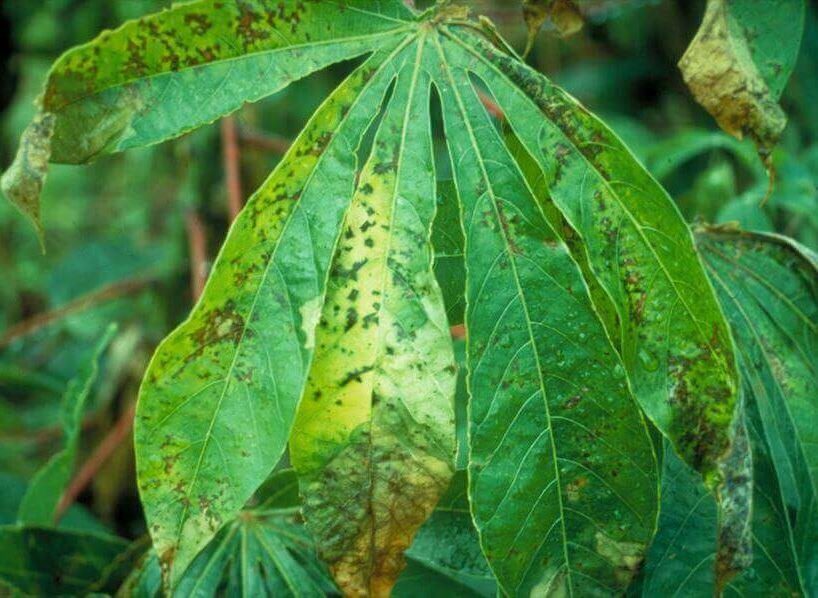
Xanthomonas axonopodis pv. manihotis is capable of infecting most members of the plant genus Manihot. Consisting of about 100 species, the most economically significant species is easily the widely cultivated woody shrub, Manihot esculenta, known colloquially as the cassava plant. In cassava, symptoms vary in a manner that is unique to this pathogen.(www.wikipedia.org)
Symptoms include blight, wilting, dieback, and vascular necrosis. A more diagnostic symptom visible in cassava with X. axonopodis infection is angular necrotic spotting of the leaves—often with a chlorotic ring encircling the spots. These spots begin as distinguishable moist, brown lesions normally restricted to the bottom of the plant until they enlarge and coalesce—often killing the entire leaf. A further diagnostic symptom often embodies itself as pools of gum exudate along wounds and leaf cross veins. It begins as a sappy golden liquid and hardens to form an amber coloured deposit. (www.wikipedia.org)
PREVENTION AND CONTROL
Use Resistant Varieties
In areas where the CBB is endemic, farmers must use CBB resistance varieties if they are to realize sustainable yields.
Roguing of Plants
Farmers cultivating susceptible varieties must regularly search and destroy the plants showing symptoms of the disease by burning them. This activity must follow the first few incidents of rains after the dry season. Early detection and destruction, can prevent or reduce the rate of spread of disease on the farm.
It is, however, safe to eat tubers of CBB infected plants.
Practise Land Fallow
In cases of an outbreak on the whole farm, farmers must harvest roots immediately and destroy the whole plants (stem, leaves, etc) by burning. They may also plough them deep into the soil. Leave the land to fallow for a minimum of 3 years in both cases. The bacterium for CBB is not able to survive outside the host for long periods.
Practise Crop Rotation
In areas where land is scarce, farmers may plant legumes and grains on the same land after the destruction of infected plants. The farmer may return after 3 seasons to grow cassava.
Apply Quarantine Measures
Authorities must monitor the movement of materials across borders to ensure the safety with respect to diseases. This will prevent the introduction of diseases to new areas.
Use of Healthy Planting Material
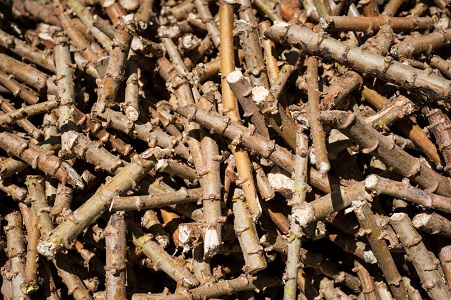
Farmers must consciously harvest stems from healthy plants completely free of any of the described symptoms of the disease. It is generally wise to avoid using planting materials from any farm suspected to be under CBB attack even if symptoms of the disease have not been observed on plants.
Control Pest
Grasshoppers and other insects that can serve as carriers of the bacterium from farm to farm must be controlled using environmentally friendly measures. Controlling grasshopper movement after the early first rains of the wet season can reduce the spread of Cassava Bacterial Blight.

Related Posts
January 22, 2018
January 19, 2018
January 19, 2018